Why You Should Leave Roof Work to the Pros
July 28, 2025

July 28, 2025

Taking care of your home often involves various projects. You might be tempted to attempt DIY, but when it comes to roof work, it's wise to leave this to professional roofing contractors and not. While the idea of tackling minor roof repairs might seem appealing to some homeowners, the potential risks and complexities involved are substantial. Engaging professional roofers not only guards your safety but also ensures the work is done correctly and efficiently.


Safety Considerations for Roofing Work

Firstly, the safety concerns associated with roof work cannot be overstated. Climbing up ladders and walking across sloped surfaces present significant hazards, especially for those without proper experience or equipment. Professional roofers are trained to handle these dangers effectively, reducing the risk of accidents or injuries. Their expertise allows them to navigate roofing tasks with precision and safety, using proper safety gear that most homeowners do not have access to.


Quality and Longevity of Professional Roof Work

Moreover, the quality and longevity of roof work are critical factors to consider. Professional roofers have intricate knowledge of various roofing materials and techniques, ensuring a high standard of work that withstands the elements for years. The roofing market, expected to be worth $342.8 billion by 2033 according to PR Newswire, reflects the increasing demand for professional services in the field. Investing in expert roofers guarantees that your roofing needs are met with quality materials and workmanship, giving you peace of mind that your home is well-protected.


Time and Cost Savings with Professional Roofers

Finally, professional roofers can save you time and money in the long run. DIY projects often incur unforeseen expenses due to trial and error or inadequate repairs that necessitate future corrections. Professionals perform thorough inspections, identifying and addressing potential issues before they escalate into more costly repair needs. This proactive approach, combined with warranties offered by many roofing companies, provides significant value and financial protection to homeowners.


 While the DIY temptation might linger in your mind, roofing is an endeavor that should be left to   roofing contractors  . The safety, quality, and cost-effectiveness of expert roofers far outweigh the appeal of a do-it-yourself approach. Put your trust in our skilled professionals at Crest Roofing and ensure your roof remains durable and dependable. Call us today!





By 7072882571 December 3, 2025
For years, many Florida homeowners faced the unofficial yet widely used “15-Year Roof Rule.” Insurance carriers often refused to renew policies for homes with asphalt shingle roofs older than 15 years—even when the roof was still performing well. As of 2025 , that is no longer allowed. Florida’s updated insurance law, Senate Bill 2-A (SB-2A) , prevents insurers from dropping your policy based solely on roof age , as long as you can provide a professional inspection confirming the roof has at least 5 years of useful life remaining . This shift from an arbitrary age requirement to a condition-based standard gives homeowners more control and more protection. Below is the CMS-friendly version of your optimized blog. From the 15-Year Rule to the 5-Year Useful Life Standard The old 15-year guideline created unnecessary stress for homeowners. SB-2A replaces that outdated approach with a much more accurate system. Key Points You Need to Know Insurers cannot deny or refuse to renew a policy solely because the roof is over 15 years old. You may provide a licensed roof inspection report verifying your roof’s condition. The inspector must confirm that your roof has at least five years of remaining useful life. If the report confirms this, roof age cannot be used as the reason for non-renewal. This means the true condition of your roof, not its age , determines your insurance eligibility. Insurance Eligibility vs. the 25% Florida Building Code Rule Two separate rules influence how roofing and insurance work in Florida. They are often confused but operate independently. 1. SB-2A (Insurance Eligibility) This governs whether an insurer can deny, renew, or drop your policy . It is based on roof condition , not age. 2. The 25% Rule in the Florida Building Code This governs roof repair requirements after damage. If more than 25% of a roof section is damaged during a 12-month period, that section must be replaced to meet current Florida Building Code standards. In summary: SB-2A affects your insurance policy. The 25% rule affects your roof repair process. How Insurers Evaluate Different Roof Types in Florida While the 15-year discussion mainly affects shingle roofs, insurance carriers evaluate all roof types based on age, condition, and risk. Asphalt Shingle Roofs This is the material most tied to SB-2A. During a Crest Roofing inspection, we evaluate: Granule loss Flexibility and brittleness Curling edges Cracked shingles Soft decking Failing seals and adhesives These factors determine whether the roof meets the 5-year remaining life requirement. Tile Roofs (Clay or Concrete) Tile roofs typically last 30–50+ years , but insurers still expect proof of condition. During tile inspections, we check for: Slipped or cracked tiles Underlayment deterioration Flashing failure Water intrusion beneath tiles Even if the tiles look great, the underlayment alone can cause a roof to fail inspection . Metal Roofs Metal roofing is popular for its superior wind resistance and longevity. We evaluate: Corrosion (especially near coastlines) Loose fasteners Panel uplift or separation Ridge cap integrity Underlayment health How Often Should You Inspect Your Roof in Florida? Because insurance decisions now depend on condition, proactive inspections are essential. Inspection Frequency Recommendations Asphalt Shingle Roofs: Every 2 to 3 years under normal conditions Annually once the roof is 10+ years old Immediately after any major hurricane, windstorm, or hail event Tile Roofs: Every 3 to 5 years Additional inspections if tiles slip, crack, or if you notice water staining inside Metal Roofs: Every 3 to 5 years More frequently if you live within a few miles of the coast due to salt corrosion Regular inspections help ensure policy renewals and reveal issues before they become expensive repairs. How to Protect Your Insurance Coverage Under SB-2A If your roof is aging or you received an insurance notice, follow these steps: 1. Be Proactive If your shingle roof is over 12 years old, schedule an inspection now—don’t wait for a non-renewal letter. 2. Get a Certified Roof Inspection This is the most important step. A Crest Roofing certified inspection provides: Photographic evidence Detailed condition reporting Remaining useful life estimate Documentation accepted by insurers 3. Keep All Documentation Maintain a file with: Inspection reports Repair invoices Warranty info Maintenance receipts Insurers favor homeowners who stay organized. 4. Communicate With Your Insurance Agent Provide reports promptly and proactively to strengthen your renewal case. What Happens If You Need a New Roof? If inspection results show your roof does not meet the “5-year useful life” threshold, replacement may be the only path to maintain your policy. Here’s what to expect with Crest Roofing: 1. Transparent Consultation & Estimate We explain roofing material options—shingle, tile, metal—and which best supports both your home and your insurance outlook. 2. Permitting & Preparation We handle: City permits HOA approvals Material delivery Property protection 3. Florida-Code-Compliant Roof Installation Your new roof will comply with the most recent Florida Building Code standards, including those for high-velocity hurricane zones. 4. Final Cleanup & Inspection We ensure your home is spotless and the installation passes all final inspections. Protect Your Home and Your Policy with a Crest Roofing Inspection SB-2A gives Florida homeowners more control than ever. Your roof’s condition—not its age —is now what determines insurability. Don’t guess—get the documentation you need to renew confidently. Crest Roofing provides: Certified roof condition reports Insurance-compatible documentation Honest, expert assessments Clear recommendations for repair or replacement Contact Crest Roofing today to schedule your certified roof inspection.
By 7072882571 December 3, 2025
Florida roofs need twice-yearly inspections plus post-storm checks. Learn how often, why it matters, costs, and hurricane-season prep from licensed experts.
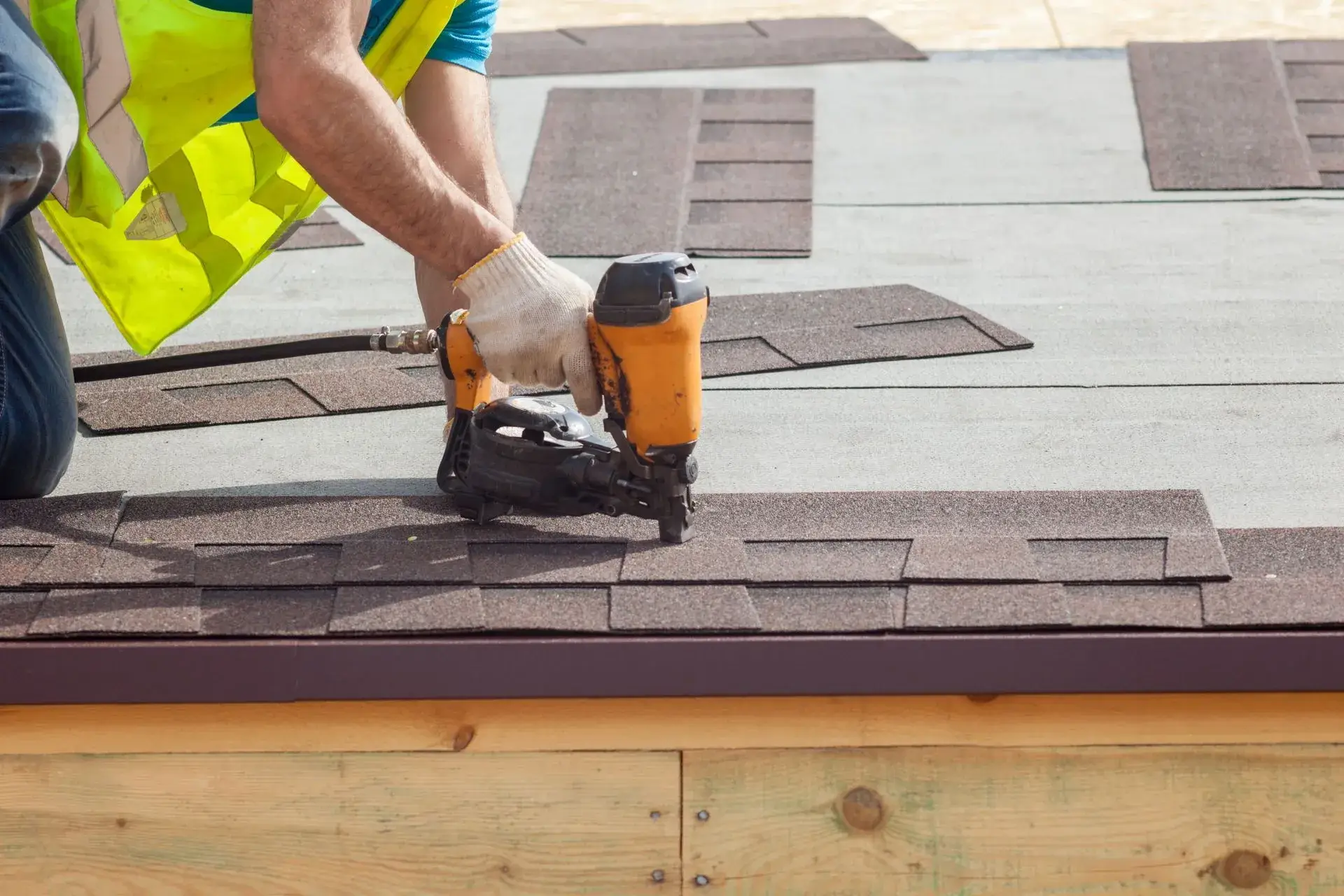
Roofer using a nail gun to install brown asphalt shingles on a wooden roof.
September 26, 2025
Discover the best roofing materials for South Florida homes. Compare tile, metal, and shingles for durability, hurricane resistance, and energy efficiency.
Show More →